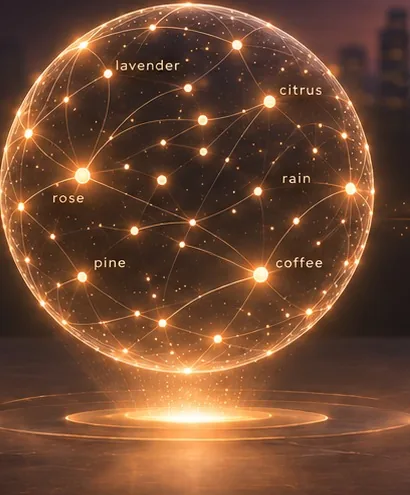
A smell,written down.
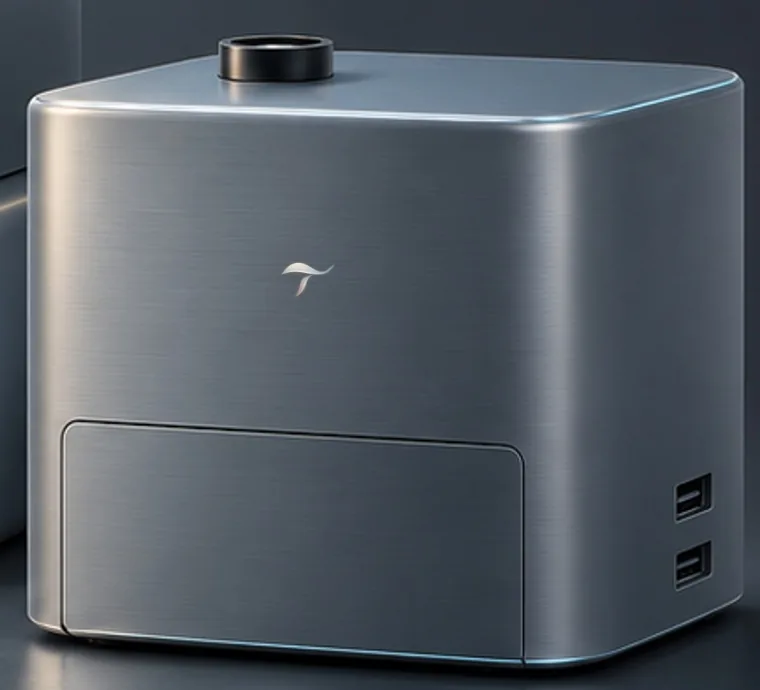
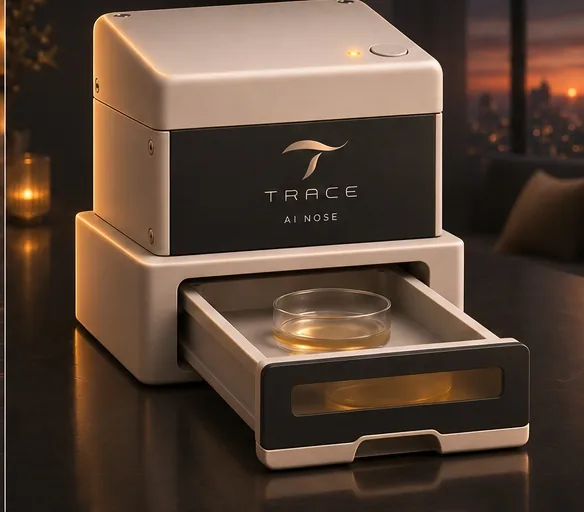
AI NOSE is a separate sampling machine. It records how a real-world smell registers on a gas-sensor array, together with everything needed to compare that reading with the next one.
Three things,kept together.
A smell is not one number. AI NOSE keeps the sensor response, the conditions it was measured in, and the words of the person who smelled it — as one record.
- 01
Sensor fingerprint
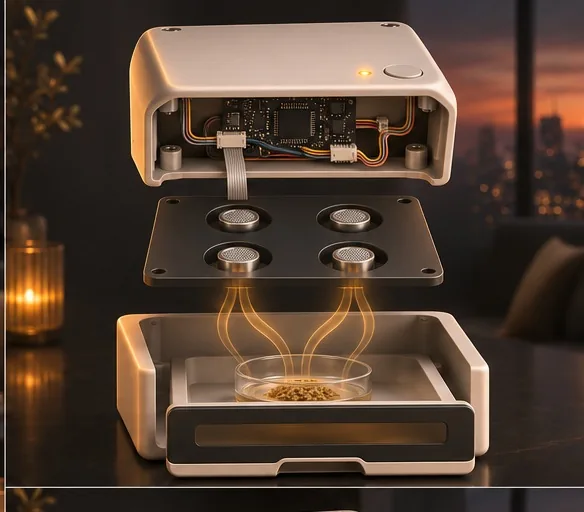
As volatile compounds pass through a closed sampling chamber, an array of gas sensors responds. The pattern of responses is the fingerprint.
- 02
Sampling conditions
Time, temperature, humidity and sample ID — plus a blank (empty chamber) and a reference sample taken alongside every reading.
- 03
Human context
The user’s own description of what they smelled, stored with the reading so a record means something to people, not only to sensors.
A drawer forthe sample.
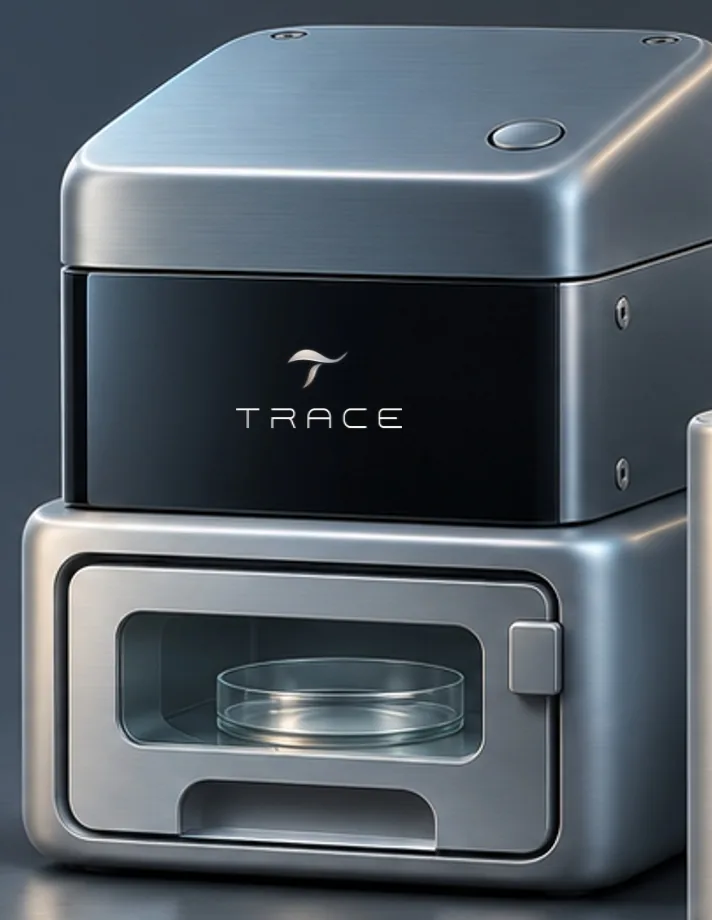
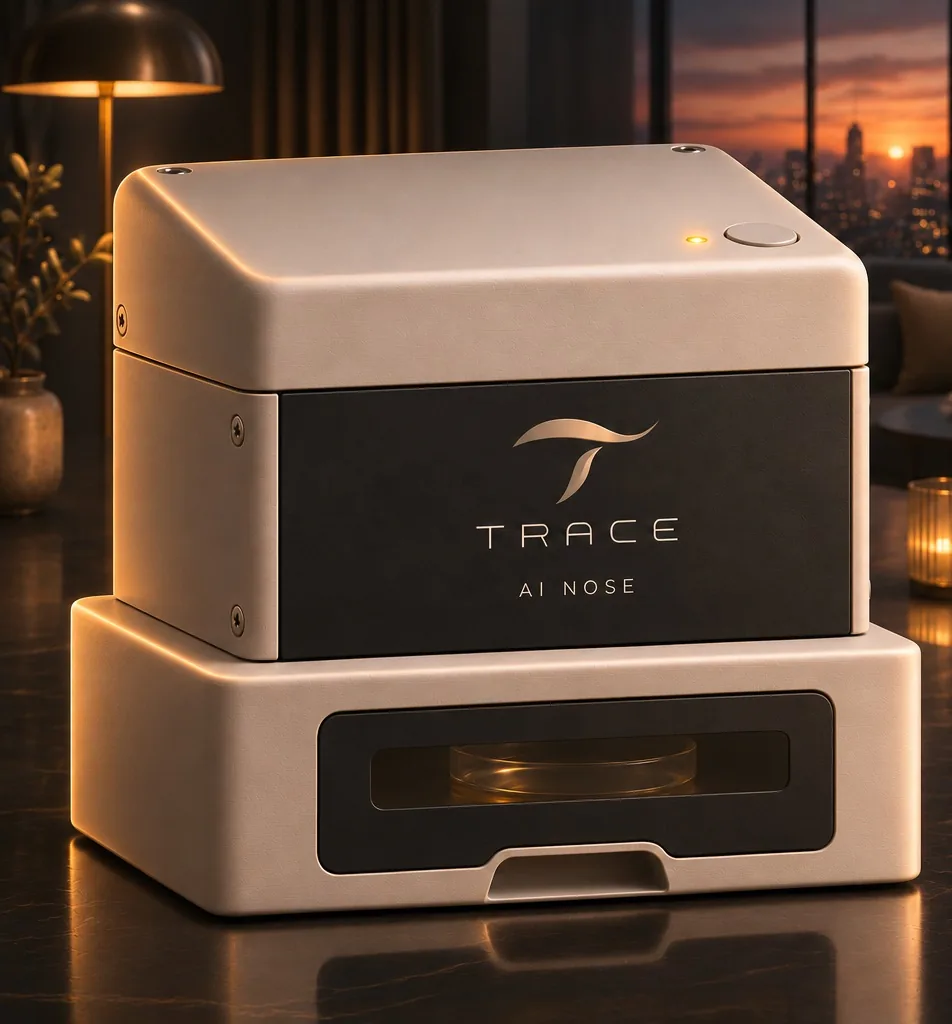
Two stacked modules: a sealed sampling drawer below, the sensing and control module above. The sample goes in a dish; the chamber closes; the reading is taken under controlled conditions.
Known samples first.Then the world.
The first job is to recognise a limited set of known aromatic samples reliably — then fresh plants, then outdoor scenes.
Test known samples
Limited essential oils and plant samples, each with a blank and a reference reading.
Record every condition
Environment, time and sample identity are logged for every reading so results can be re-tested.
Re-test on another day
Different batch, different day, different device: does the same smell still come out as the same smell?
Where it stands
Firmware has been compiled for a five-essential-oil test set and the software tested on synthetic data. Recognition of physical samples and cloud upload have not yet been tested. An electronic nose recognises patterns it has been trained on; it does not identify every molecule the way laboratory GC-MS does.