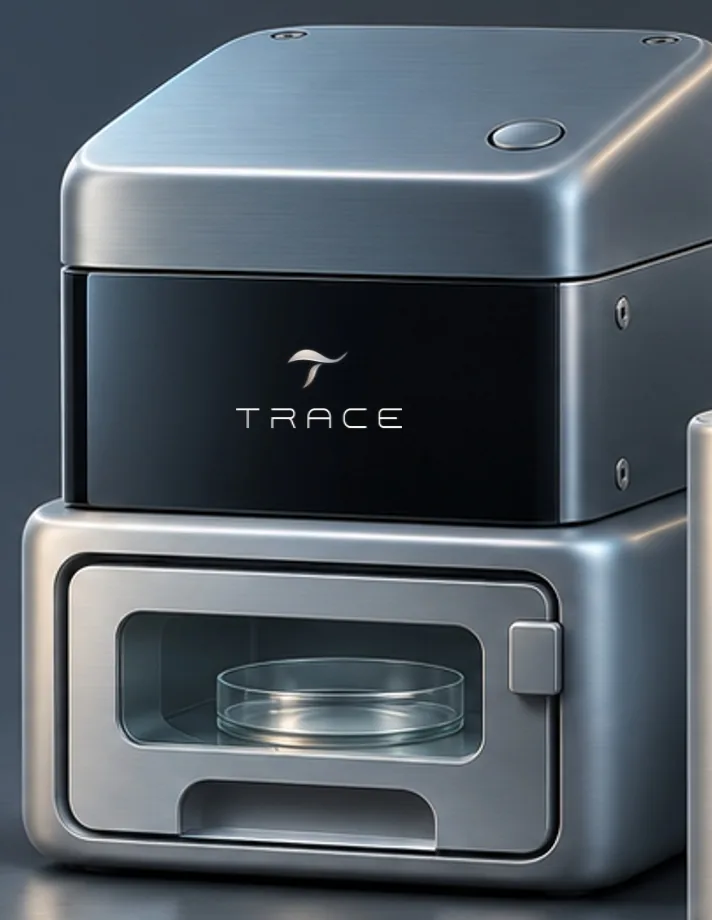
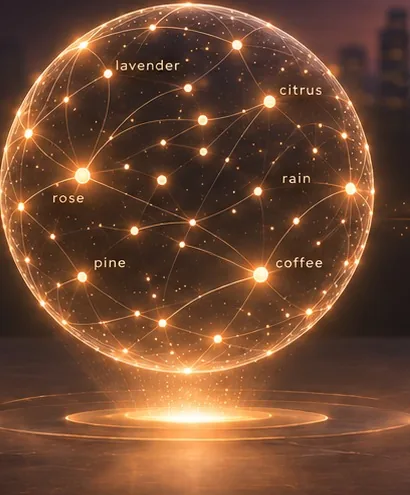
Say how itshould feel.
Most people cannot name fragrance notes — but they know exactly what they want to feel. AI Scent Creation turns those words into a draft blend, and your nose does the rest.

Five steps,repeated until it is right.
- 01
Describe
“A summer beach — but fresher.” Words, a photo, a sample, or all three.
- 02
Draft
AI proposes a blend using only the ingredients that are actually available.
- 03
Smell
A physical sample, or playback on an AI Diffuser.
- 04
Refine
“Less sweet, more sea salt.” The note becomes the brief for the next version.
- 05
Confirm
The version you approve is saved — with its history — and can be ordered or played again.
Type a feeling.Refine the draft.
A browser sketch of the experience. It uses simple keyword rules — the real system learns from paired descriptions, samples and confirmed versions.
Concept simulation A keyword sketch of the interaction, running in your browser. It is not TRACE’s AI model and does not produce real formulas.
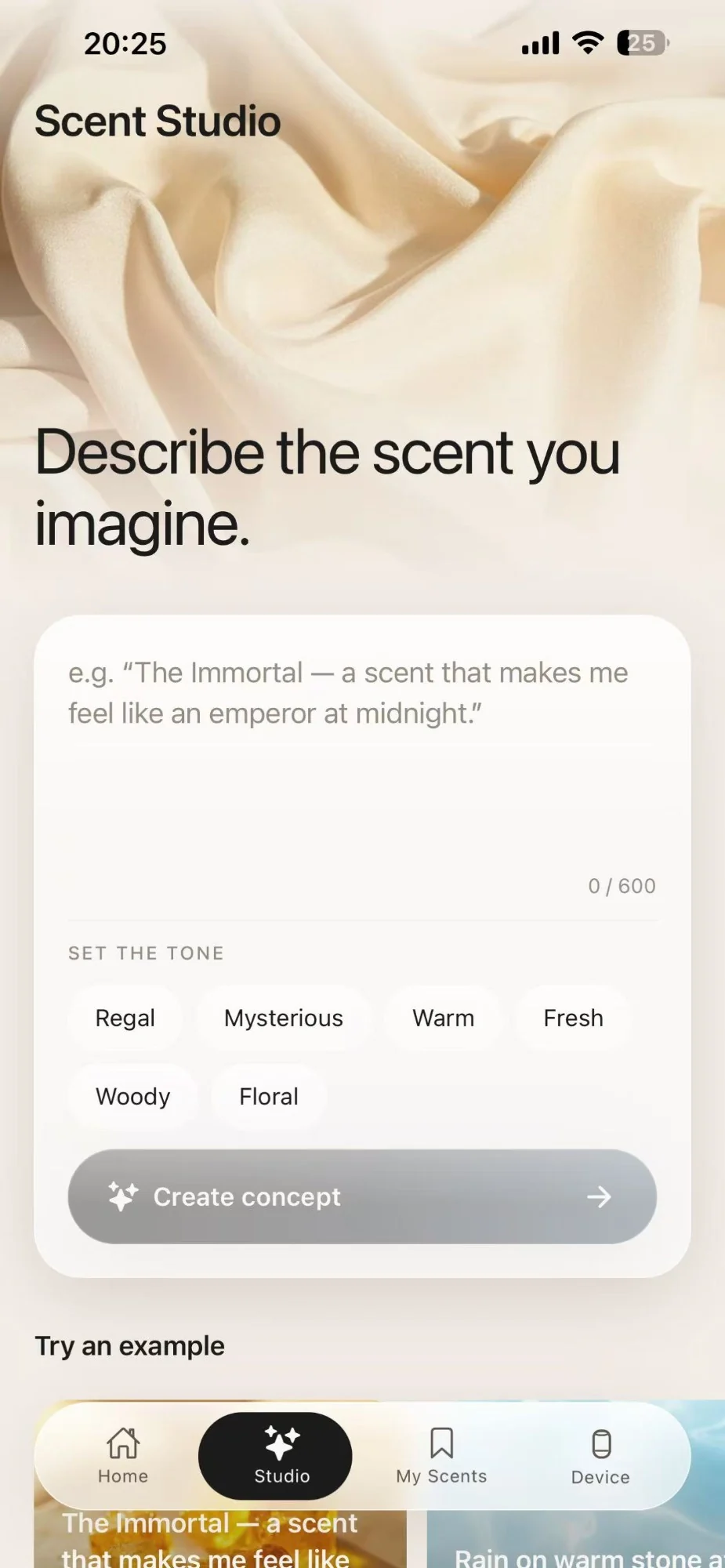
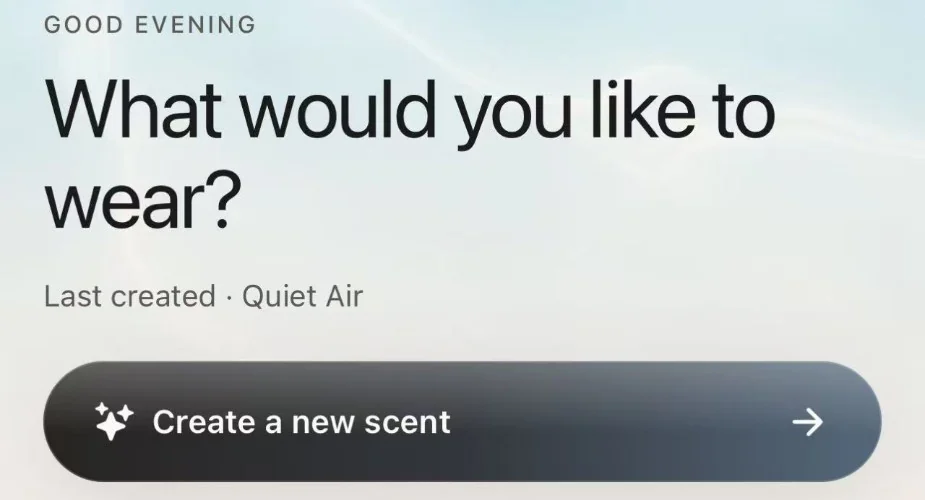
Same words.Different noses.
Two people ask for exactly the same thing and end up somewhere different. That is why every smelled sample and every note is kept: it is the data that makes the next first draft better.
| Person A | Person B | |
|---|---|---|
| Asked for | “Summer seaside, fresher” | “Summer seaside, fresher” |
| After smelling v1 | Citrus good, aquatic too heavy | Wants sea salt, citrus too sweet |
| Saved as v2 | Keep citrus, soften aquatic | Keep sea salt, cut sweetness |
Illustrative example from TRACE’s data design.
What AI does
Interprets language, proposes candidates within the ingredients a device actually holds, and learns from every confirmed version.
What it does not
Guarantee a match on the first try. TRACE measures first-try acceptance and the number of rounds needed to confirm — and will report those numbers from the pilot.